 Shoe Shine Kits
 Care Products
 Shoe Trees
 Brush
Brush Polishing Cloths
 Shoe Shine Boxes
 Shoe Horns
 Insoles
 Boots Accessories
 Shoe Bags
 Shoe Laces
 Socks
Socks Shoe Care Guide
 Kits
Kits Care Products
 Customization
 Shoe Trees
 Polishing Cloths
 Shoe Horns
 Shoe Laces
 Insoles
 Shoe Bags
 Tutorials
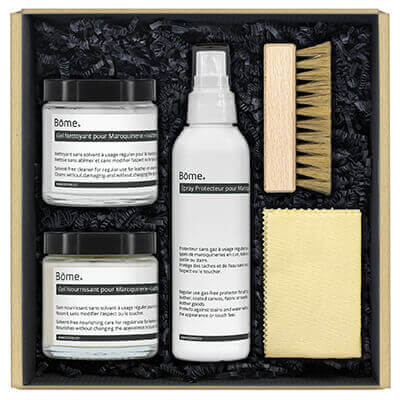 Kits
Kits Care Products
 Polishing Cloths
 Tips & Videos
 Kits
Kits Care Products
 Microfibers
 Tips & Videos
 Kits
Kits Care Products
 Microfibers
 Tips & Videos
 Polishing Leather Shoes
 Suede Shoe Care
 Cleaning and Protect Sneakers
 Cleaning your canvas shoes
 Clean your Bag and Leather Goods
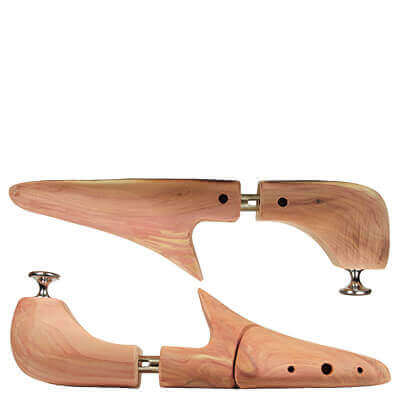 The Shoe Tree Bible
 Clean your car's leather
 Clean your leather sofa
 All Shoe Care Guide
 Our story
 News
News Guides & advices
 Decodings
 Customer reviews
3 Shoe Polishing Mistakes That Are Damaging Your Shoes
How can polishing actually damage your shoes ?
At Monsieur Chaussure, we see it all the time: trying to do the right thing… and damaging your shoes instead.
Leather is a living material. It needs to be cleaned, nourished and protected.
If one of these steps is skipped or done incorrectly, leather can dry out, become stiff and eventually crack permanently.
Here are the 3 most common mistakes during shoe shine:
Mistake #1: skipping the cleaning step
Applying polish on dirty leather is just layering products. With every new application, you “seal” dust, greasy residue, and old waxes under a fresh film.
Without a leather cleaner, you do not remove the built-up layers of polish, embedded dirt, or the oily film that then prevents care products from absorbing properly.
Result: the leather suffocates, dries out, loses its suppleness, and eventually cracks, often along the natural flex creases.
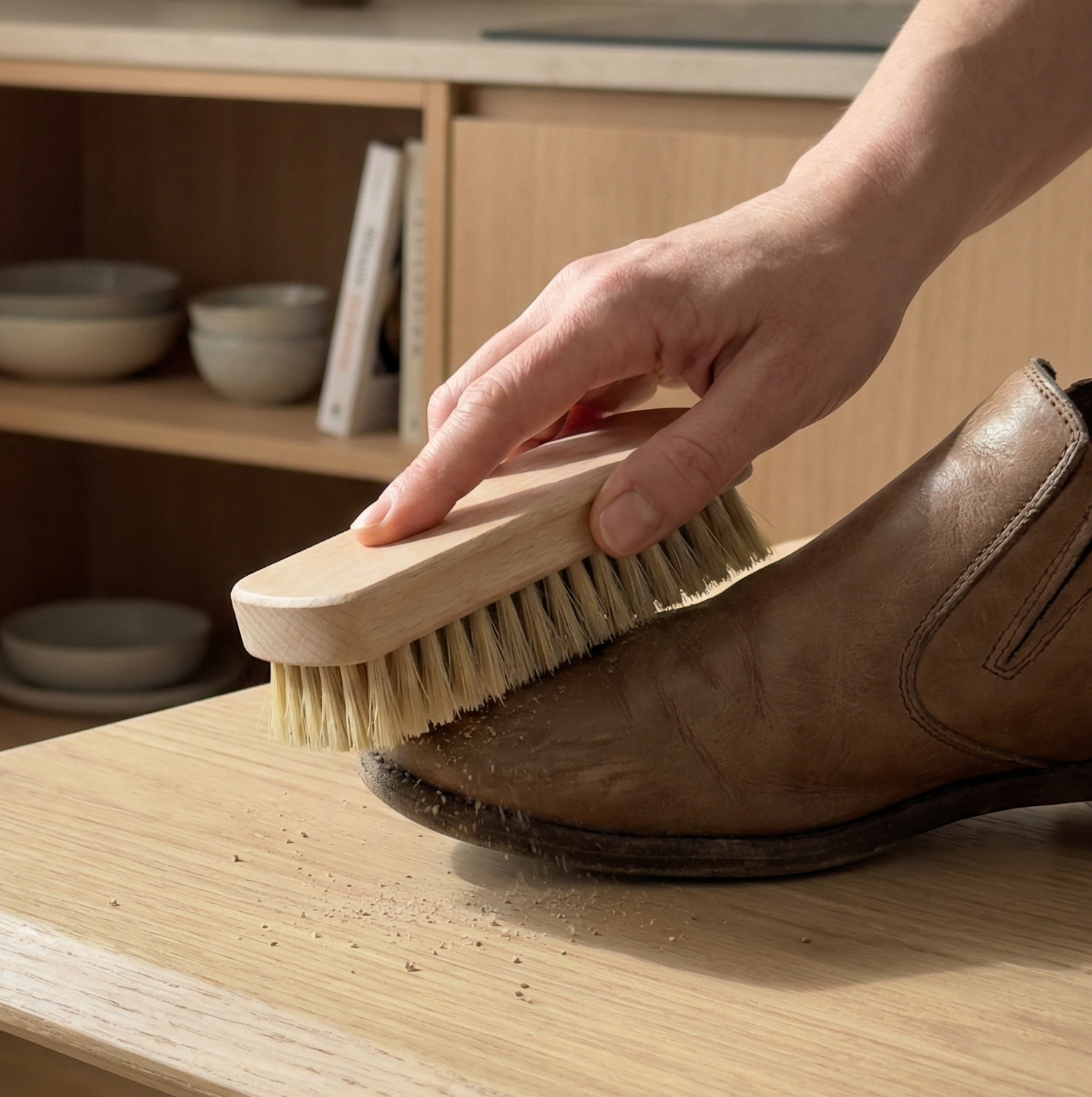
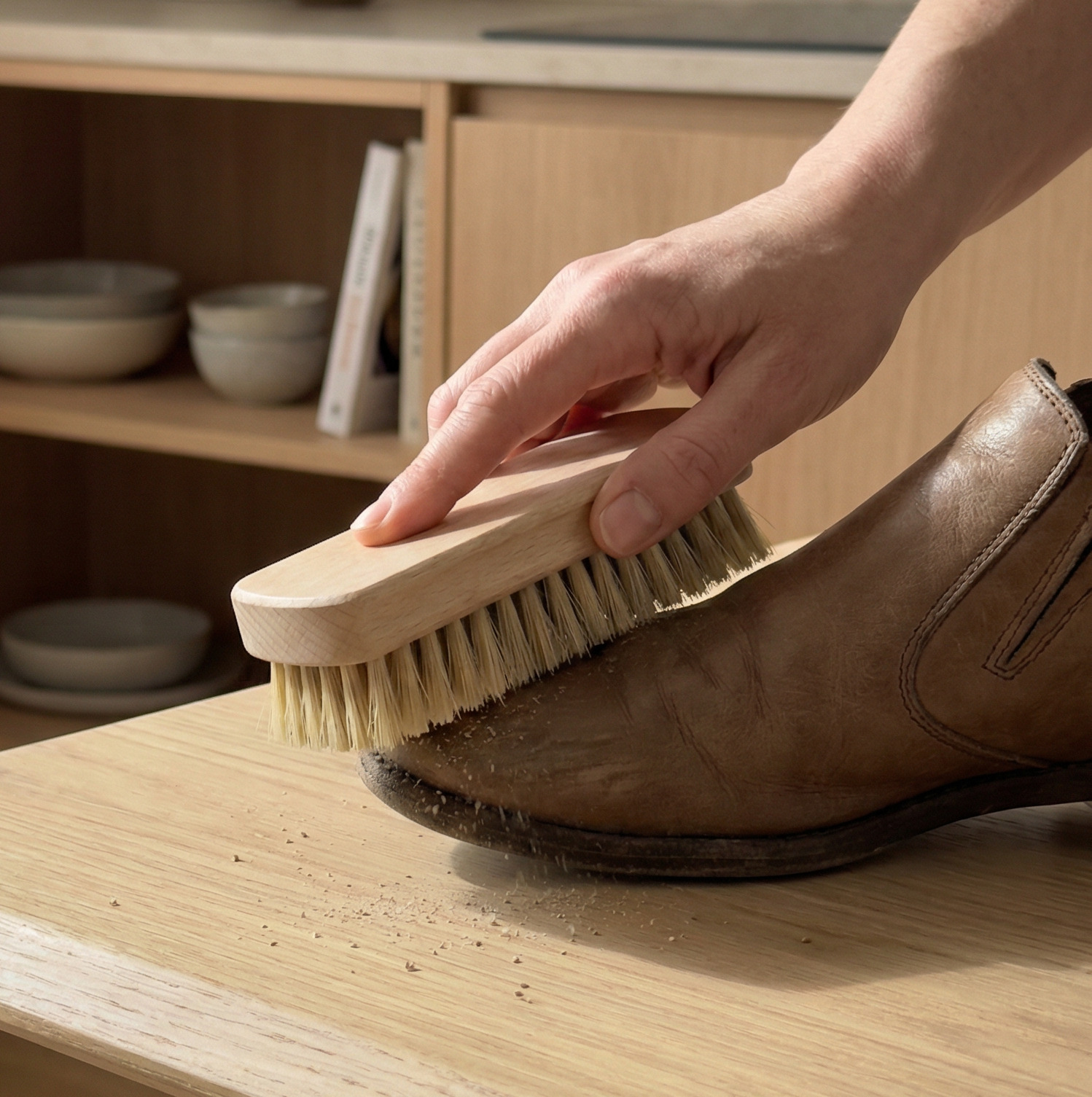
So always start your shoe care routine with a thorough brushing using a cleaning brush to remove dust, then use a leather cleaner to “remove makeup” from the leather and begin again on a clean base.
Mistake #2: focusing only on shine
Polishing wax protects and adds shine, but it hardly nourishes the leather. Its main job is to leave a thin wax film that protects the surface and boosts gloss.
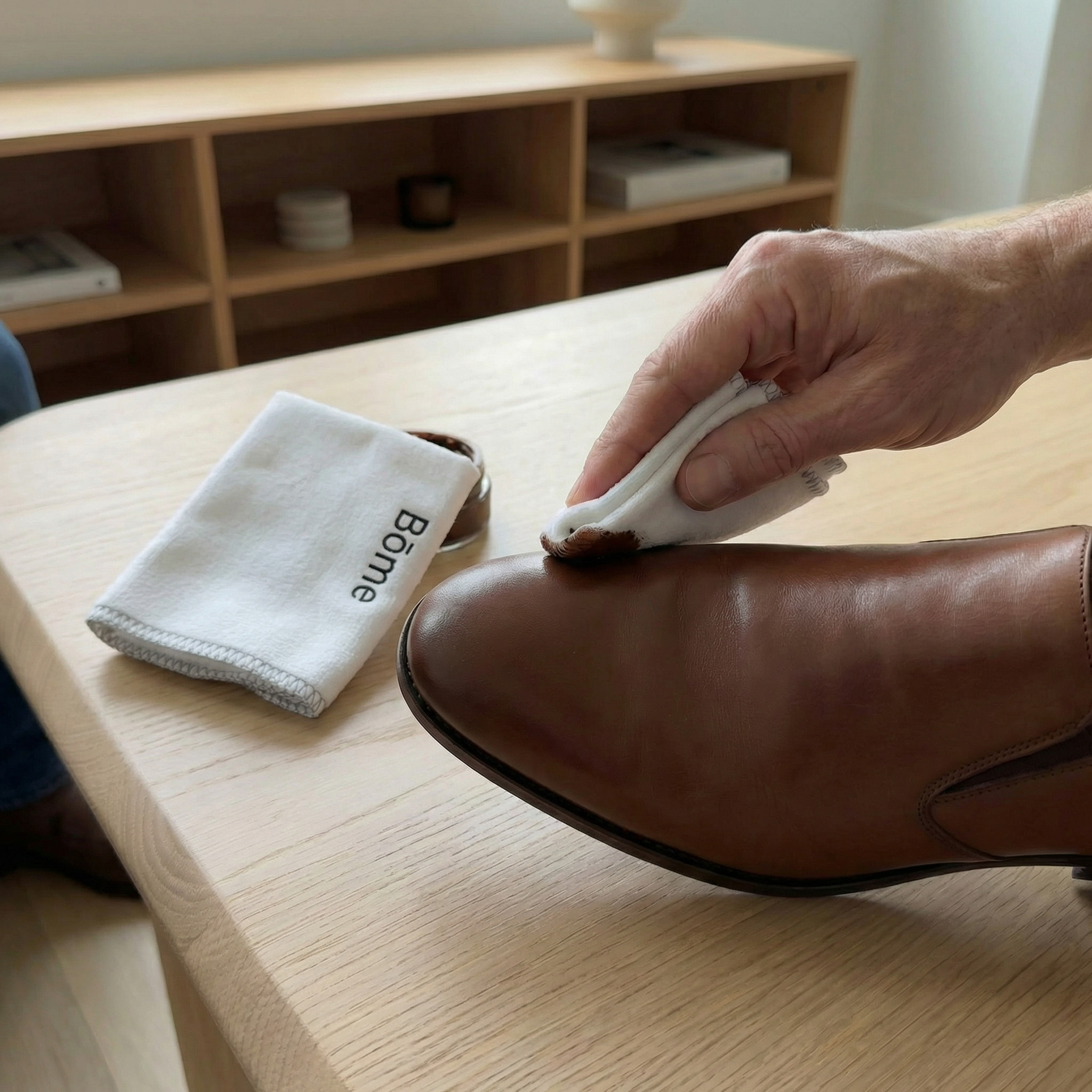
If you only do that, the leather can stay dry deeper down, lose suppleness, and crease or crack more quickly over time. After cleaning, apply a shoe cream to nourish, soften, and, if needed, gently revive the color.
This is what makes the biggest difference long term: the leather stays flexible, the patina settles, and the finish looks more even.
Important: apply a thin layer and work the cream into the leather. The leather should absorb it, not become saturated. Let it sit for a few minutes, then brush to remove any excess and even everything out. I
f there is too much product left on the surface, remove it with the cleaning brush before moving on to final shining.
Mistake #3: using the wrong brush at the wrong time
Not all brushes serve the same purpose, and that is exactly what makes the difference in the final result.
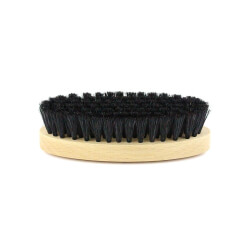
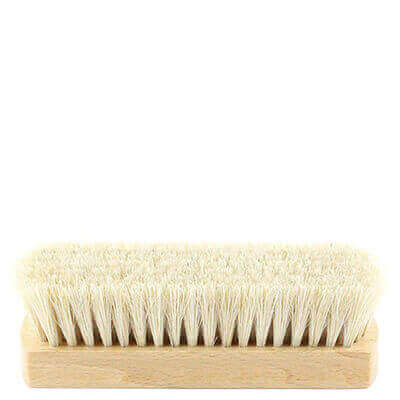
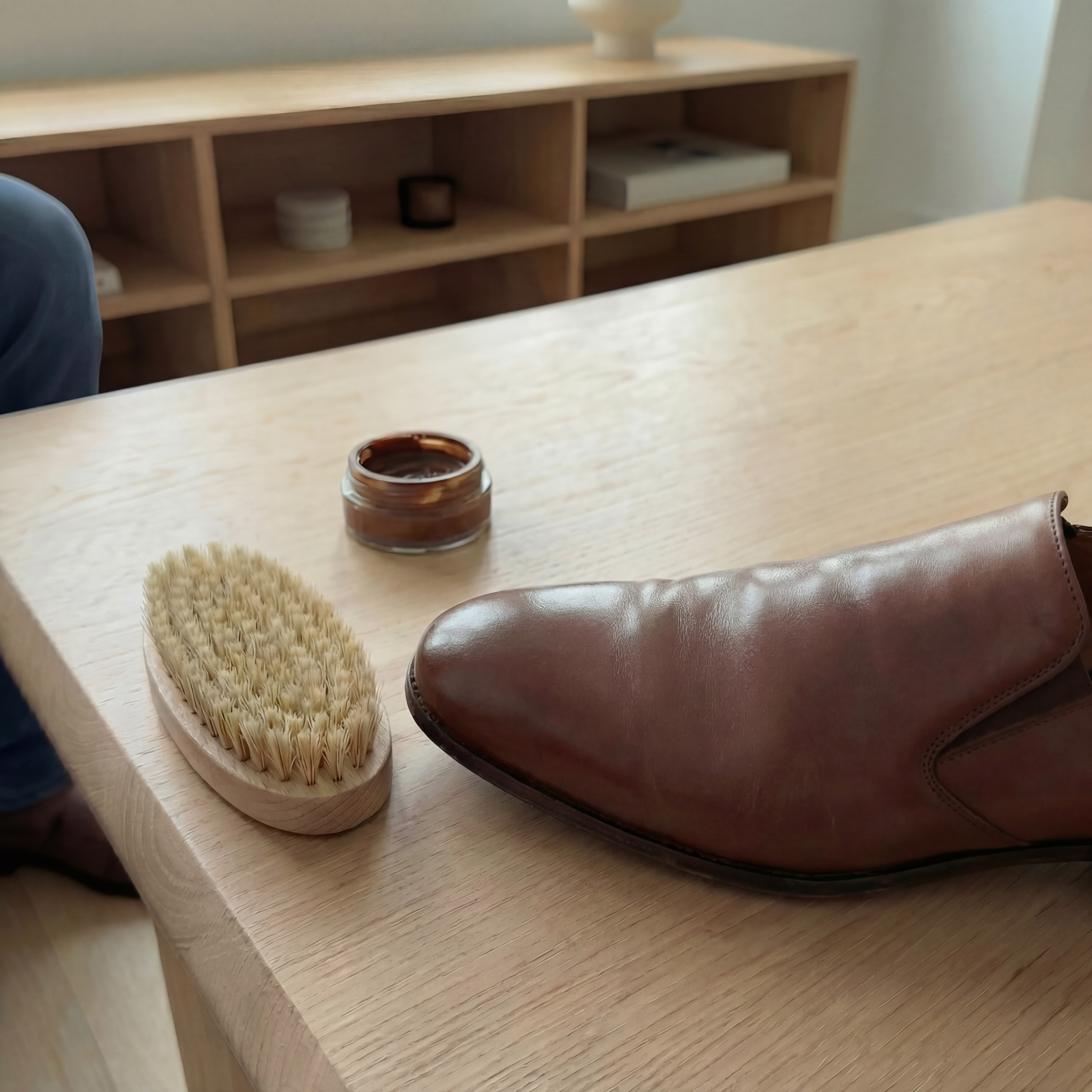
The boar-bristle cleaning brush is firmer: it is made to lift dust, dislodge dried dirt, and, just as importantly, remove excess cream or wax without scratching the leather.
Use it at the very beginning, then between each step (after leather cleaner, then after shoe cream) so product does not build up on the surface.
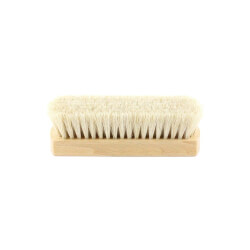
The horsehair polishing brush is softer and denser. It should be used at the end, after applying polishing wax, to gently warm the wax through friction, build shine, and even out the protective film across the whole shoe, with no streaks or overloaded spots.
Important: do not mix brushes. A cleaning brush may take off the shoe shine you’ve just applied and a shoe shine brush will not clean off dirt and excess product efficiently.
Ideally, keep one brush per purpose (and, when possible, per color) to work faster and get a cleaner shine.
How often should you polish your shoes?
On average, we recommend a full care routine about once a month, and more often if you wear your shoes several times a week, deal with rain, or run into everyday mishaps.
Well-cared-for leather lasts longer, stays supple and well nourished, and develops a beautiful patina.
Consistency matters more than the amount of product you apply.